How to Prepare Your Property for a Dumpster Delivery in Springfield, MO
Preparing a property for a dumpster delivery in Springfield, MO means clearing a 20 to 25 foot flat drop zone, checking overhead clearance for the delivery truck arm, laying down plywood or timber mats on driveways, moving vehicles out of the drop zone, and confirming placement details with the driver on arrival. Homeowners who complete these steps before the truck shows up avoid driveway damage, permit issues, and delivery delays.
A dumpster delivery that goes smoothly starts long before the truck pulls into the driveway. Homeowners who skip a few basic steps often end up with a cracked driveway, a container placed in the wrong spot, or a driver who cannot back the truck into position at all. Knowing how to prepare for dumpster delivery in Springfield, MO removes most of the guesswork and prevents the delays that come with last-minute surprises.
This guide walks through space requirements, driveway versus street placement rules, surface protection methods, and the exact checklist Springfield homeowners should complete before a roll-off container arrives. Following these steps keeps the delivery on schedule and protects the property at the same time.
How Much Space Does a Roll-Off Dumpster Actually Need?
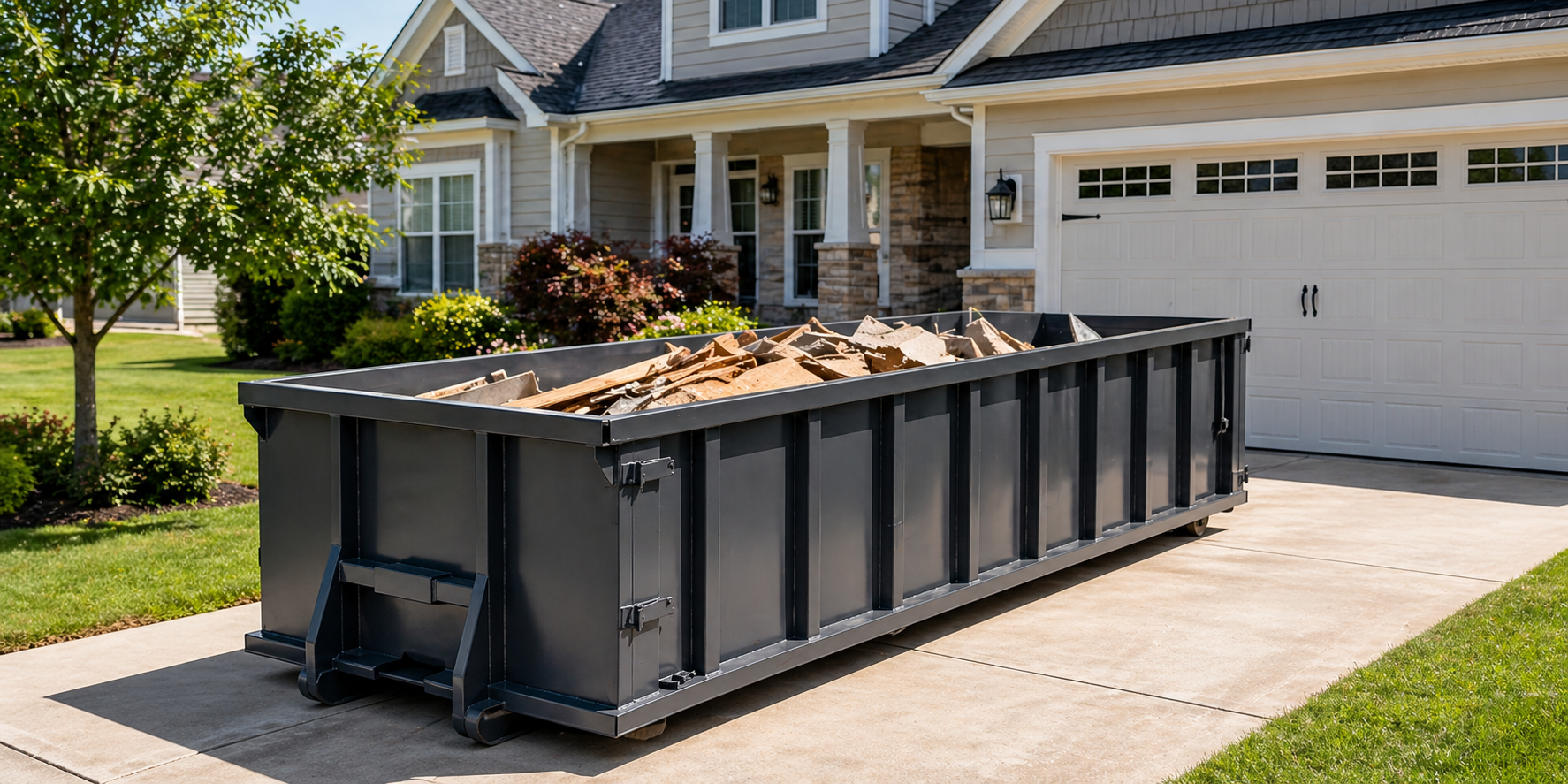
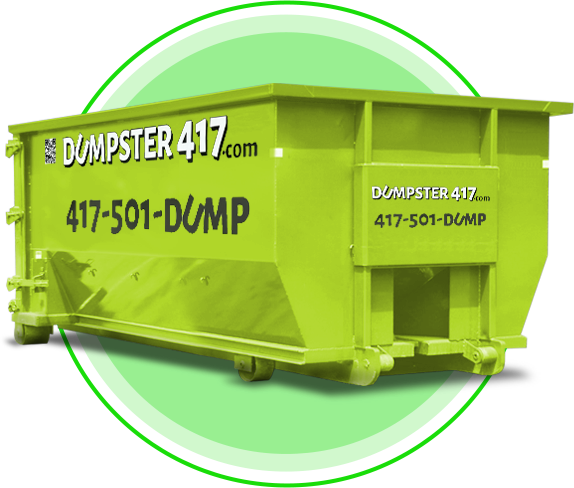
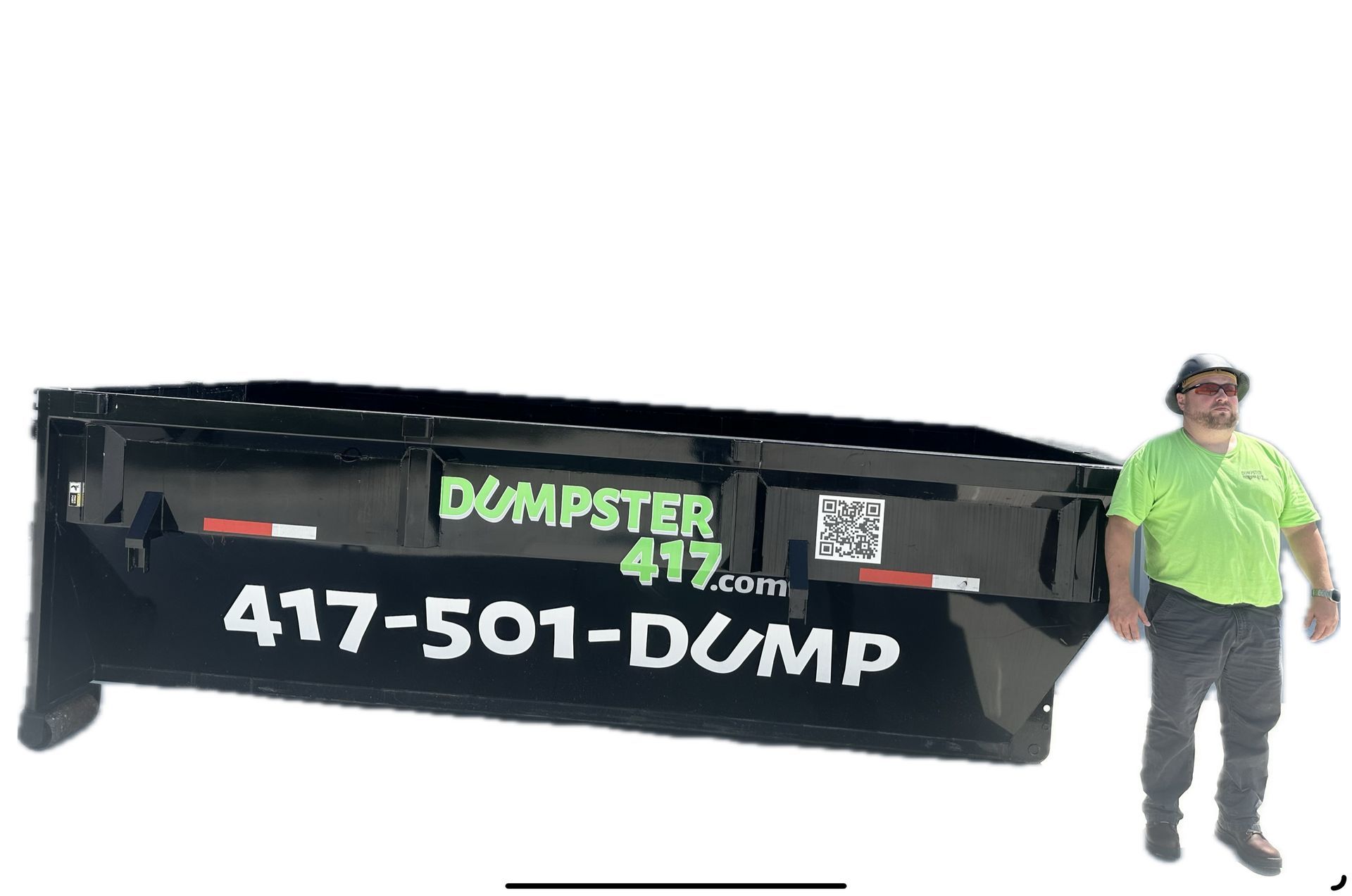
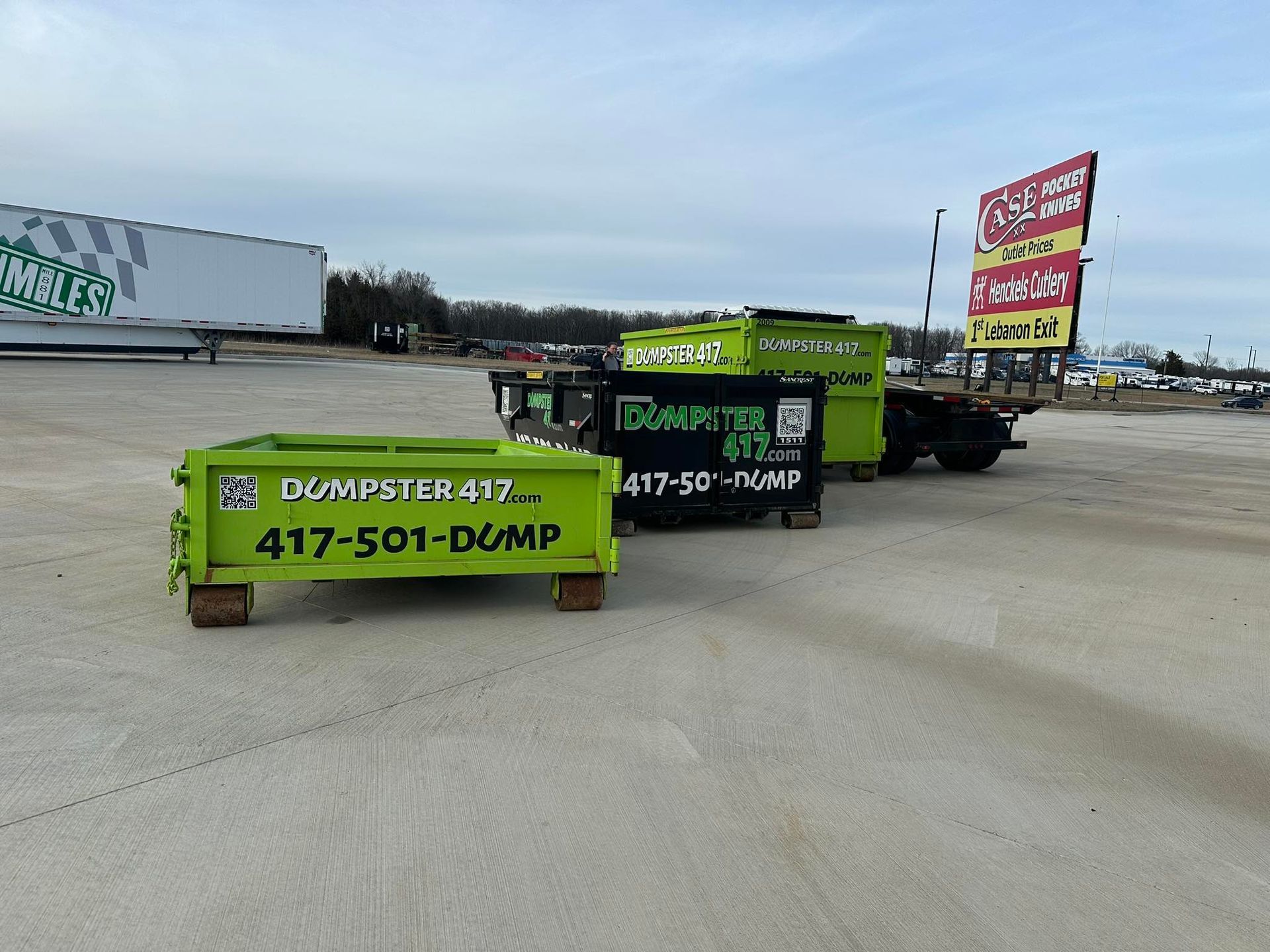
Roll-off containers range from 6-yard bins to 40-yard units, and each size needs a specific footprint plus room around it for the delivery truck to maneuver. A 15-yard dumpster typically measures about 16 feet long by 8 feet wide, while a 20-yard container runs closer to 22 feet long. Larger 30 and 40-yard units need even more clearance, both for the container itself and for the truck bed that tilts to set it down.
Homeowners comparing sizes before booking can review the 20-yard dumpster dimensions to confirm the container will fit the available space.
Beyond the footprint of the container, drivers need roughly 3 to 4 feet of clearance on each side and about 60 feet of straight approach room to back the truck in without multiple attempts. A driveway that looks spacious for a parked car may still be too narrow once truck clearance is factored in, which is why measuring before scheduling matters.
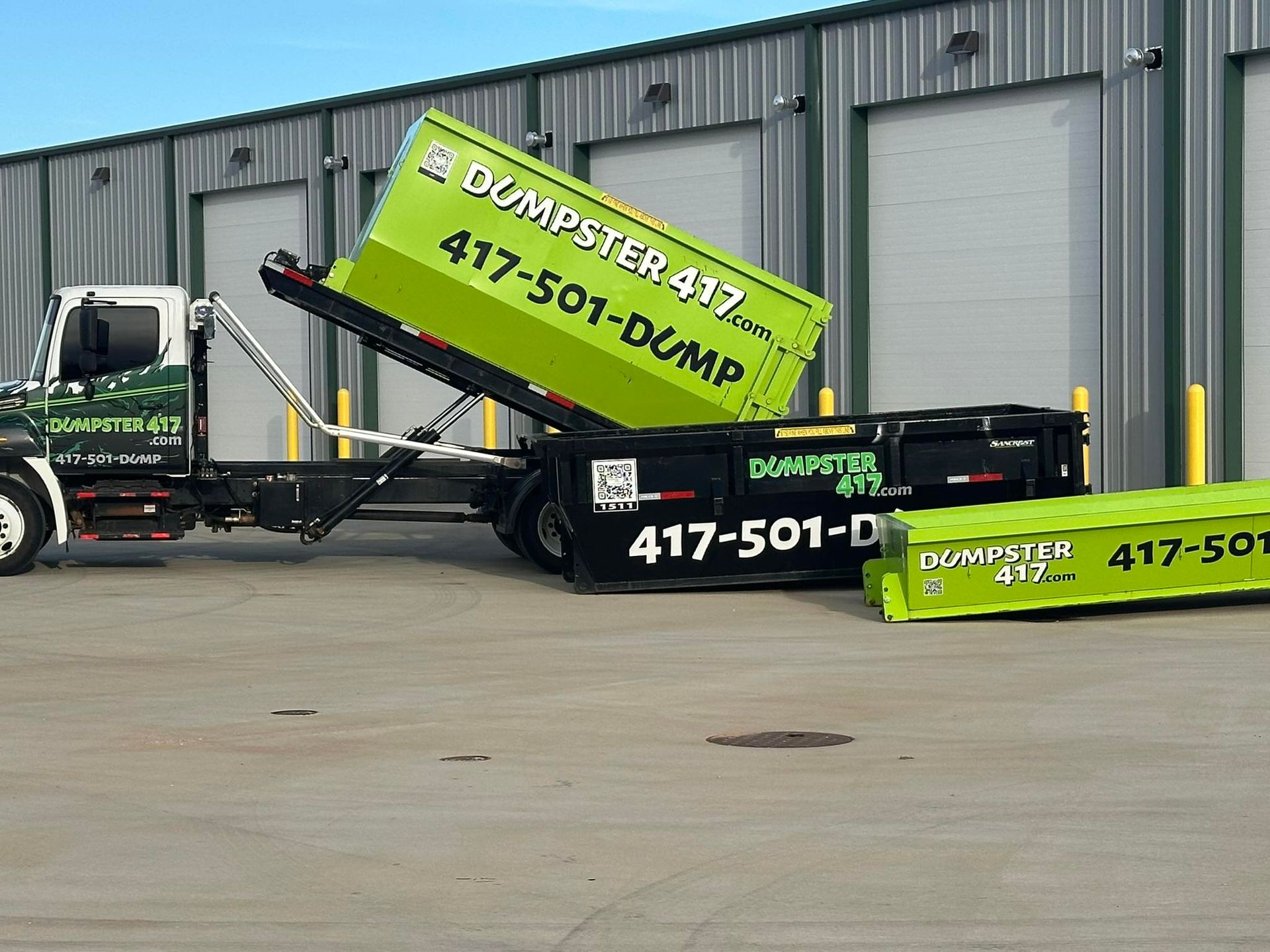
Overhead clearance matters just as much as ground space. Delivery trucks raise a hydraulic arm several feet above the container height to place or remove it, so any low-hanging branches, power lines, or carport roofs near the drop zone need to be identified in advance.
Ground conditions play a role too. A flat, level surface allows the truck to slide the container off the rails smoothly, while a sloped or uneven drop zone can cause the container to sit crooked or shift slightly once loaded. Properties with a graded driveway or a compact gravel pad tend to have the fewest placement issues, while soft lawns or sloped side yards require extra planning.
Measuring the intended spot with a tape measure before booking, rather than estimating by eye, prevents the most common scheduling problem: a container that arrives and simply does not fit where it was expected to go.
Driveway Placement vs. Street Placement: What Springfield Homeowners Should Know
Most Springfield properties can accommodate a dumpster directly on the driveway, but placement rules shift depending on whether the container sits on private property, in an alley, or on a public street.
Private Driveway Rules
Driveway placement is the simplest option in most cases, since it requires no city permit and keeps the container off public right-of-way. The main requirements are a flat, stable surface and enough clearance for the truck to enter and exit without crossing curbs, landscaping, or parked vehicles.
Lot sizes vary across the Springfield area. Properties in Ozark and Willard often have longer driveways with more staging room, while older neighborhoods closer to downtown Springfield tend to have shorter, narrower driveways that require more careful planning before the truck arrives.
Street Placement and City Permits
When a driveway cannot accommodate the container, placement on the street is sometimes possible, but Springfield requires a permit for any dumpster left on a public roadway for more than a short period. Rules cover container reflectors, distance from intersections, and total time allowed at the curb.
Homeowners considering street placement should check current requirements with the City of Springfield public works department before scheduling delivery, since permit rules can change by neighborhood.
Street placement also raises visibility and safety questions that driveway placement avoids entirely, including nighttime lighting requirements and coordination with trash or recycling pickup schedules.
Alley and Side-Yard Placement Considerations
Some Springfield properties, particularly in older sections of town, have rear alley access that works well for dumpster placement. Alleys keep the container out of the way of daily driveway use, but narrow alley widths and utility poles can make truck access difficult.
Side-yard placement is another option when a gate or opening is wide enough to allow the truck's arm to reach over a fence line. This option works only when there is no overhead obstruction and the ground surface can support the container's weight.
Before choosing an alley or side-yard spot, it helps to confirm the width of the access point against the container's full length, not just its width, since the truck needs a straight line of sight to lower the arm without clipping a fence post or gate frame. A quick measurement of the gate opening avoids a wasted delivery attempt.
How to Protect Your Driveway Before the Dumpster Arrives
A loaded roll-off container concentrates significant weight on a small footprint, and older or weaker driveway surfaces can crack or shift under that pressure. A short amount of prep work reduces this risk substantially.
The heaviest point load usually comes from the container's steel rails rather than its full base, since the rails carry the weight distributed by the truck's rollers during placement and pickup. That concentration is exactly why surface protection under the rails matters more than protecting the driveway as a whole.
Plywood and timber mats: Placing 3/4 inch plywood sheets or 2x10 timber boards under the container's rails spreads the weight across a wider area and prevents the sharp edges of the container from digging into asphalt or concrete.
Protection matters most during Missouri's spring thaw, when ground moisture softens soil beneath driveways and increases the chance of shifting or cracking. Older concrete slabs with existing hairline cracks are also more vulnerable and benefit from mats even in dry conditions.
| Surface | Protection Tip |
|---|---|
| Asphalt driveway | Use 3/4 inch plywood sheets or timber mats under all four corners of the container. |
| Concrete driveway | Add mats during freeze-thaw season, since older concrete can crack under point loads. |
| Gravel or dirt | Lay down 2x10 boards to spread weight and prevent rutting after spring rain. |
| Grass or lawn | Avoid placement when possible, or use plywood sheeting to prevent long-term dead patches. |
Dumpster417 drivers place containers as gently as possible and position rails to minimize point pressure, but the property owner is ultimately responsible for surface protection, so having mats ready before the truck arrives is the safest approach.
A Pre-Delivery Checklist for Springfield Homeowners
Running through a short checklist before the scheduled delivery date prevents most of the common problems that slow down a dumpster rental.
1. Confirm the drop zone is flat, stable, and large enough for the container size ordered.
2. Measure overhead clearance for trees, power lines, gutters, and carport roofs.
3. Move all vehicles out of the driveway and drop zone the morning of delivery.
4. Lay down plywood or timber mats on driveways, especially during spring thaw.
5. Call 811 at least two business days ahead if any underground digging is planned near the site.
6. Notify neighbors if the container will sit close to a shared property line or fence.
7. Check whether street placement requires a City of Springfield permit.
8. Confirm gate codes or lot access instructions for the delivery driver.
9. Review the rental agreement for weight limits and prohibited materials before loading begins.
10. Keep a clear path from the house to the container for easier loading throughout the rental period.
A full breakdown of weight limits and accepted materials is available in the rental agreement and policies page.
Loaded containers must also stay within road-legal weight thresholds once picked up for transport, and homeowners loading heavy debris such as concrete or shingles can review federal weight limit guidelines for additional context on why weight limits matter.
Overhead Hazards to Check Before Delivery
Overhead obstacles cause more delivery delays than most homeowners expect. Power lines running across a driveway, low tree branches, and second-story overhangs can all block the arm the truck uses to lower or lift a container.
Walking the intended drop zone and looking straight up before the delivery date catches most of these issues early. Trimming a few branches or shifting the drop zone location by several feet is far easier to handle in advance than discovering the problem the moment the truck arrives.
For any project that also involves digging near utility lines, homeowners should always Call 811 before you dig to confirm the location of buried gas, electric, and water lines.
Communicating known overhead constraints to Dumpster417 ahead of time, rather than waiting until the driver is on-site, gives the team a chance to plan an alternate placement if the original spot will not work.
What to Tell the Delivery Driver on Arrival
A short conversation with the driver on arrival prevents most placement mistakes. Pointing to the exact intended spot, rather than gesturing broadly toward the driveway, gives the driver a precise target before backing the truck into position.
Any preference for container orientation, such as keeping the door end facing the house for easier loading, should be mentioned before the truck backs in, since repositioning after the container is set down is far more difficult.
Gate codes, lot restrictions, and any shared driveway arrangements should also be communicated up front. Drivers working with incomplete information are more likely to place a container in a suboptimal spot simply because they were never told about a restriction.
It also helps to mention any recent yard work, sprinkler lines, or septic components near the drop zone that might not be visible from the street. A driver who knows where a sprinkler head or septic lid sits underground can avoid rolling the truck's tires directly over it during backup and placement.
Common Delivery Mistakes Springfield Renters Make (And How to Avoid Them)
• Leaving a vehicle parked in the drop zone the morning of delivery, which forces the driver to reschedule or place the container in a less convenient spot.
• Skipping the call to check for underground utility lines before any digging or heavy equipment work begins near the container.
• Placing the container too close to a fence, shed, or property line, which can lead to disputes with neighbors or damage during pickup.
• Assuming a driveway that fits a car will also fit a truck's turning radius, without measuring the full approach distance.
• Overlooking overhead branches or wires until the truck's arm is already raised and ready to set the container down.
Most of these mistakes trace back to the same root cause: treating the delivery date as the first time to think about placement, rather than planning it out beforehand. A short walk around the property a day or two ahead of time resolves nearly all of them.
First-time renters in particular tend to underestimate how much notice a placement change requires once the truck is already en route. Calling ahead with questions, rather than waiting to sort out placement details with the driver on delivery day, gives the Dumpster417 team time to adjust the schedule if a different spot or a smaller container turns out to be a better fit.
Final Thoughts on Preparing for a Dumpster Delivery
Getting a property ready for a roll-off container comes down to a handful of repeatable steps: measuring the space, checking overhead clearance, protecting the driveway surface, clearing vehicles from the drop zone, and communicating clearly with the driver. Homeowners in Springfield, Ozark, Willard, and the surrounding communities who follow this checklist consistently see faster, cleaner deliveries with far fewer surprises.
Seasonal timing plays a role as well. Missouri's spring thaw softens ground conditions across the region, so extra attention to surface protection during that window pays off, while summer and fall deliveries generally deal with firmer, more predictable ground.
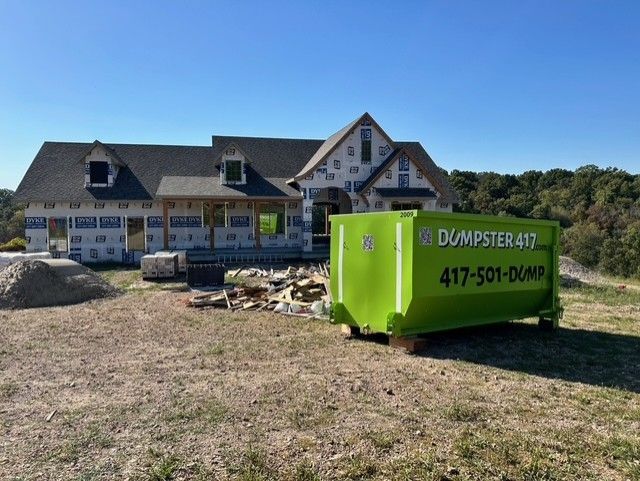
Dumpster417 works with local homeowners every week to plan placement details before the truck ever leaves the yard, and offers dumpster rental in Springfield for renovation, cleanout, and construction projects of every size.
Questions about a specific property or an unusual placement situation are always worth asking before booking. Call Dumpster417 at
(417) 501-3867 to review the details, or schedule delivery online to get a container on the calendar.